
Overmolding service
We provide custom overmolding services for a wide range of industries, including automotive, electronics, medical devices, and consumer products. From mold design and prototyping to full-scale production, our team delivers high-quality overmolded parts with reliable bonding, precision, and consistency.
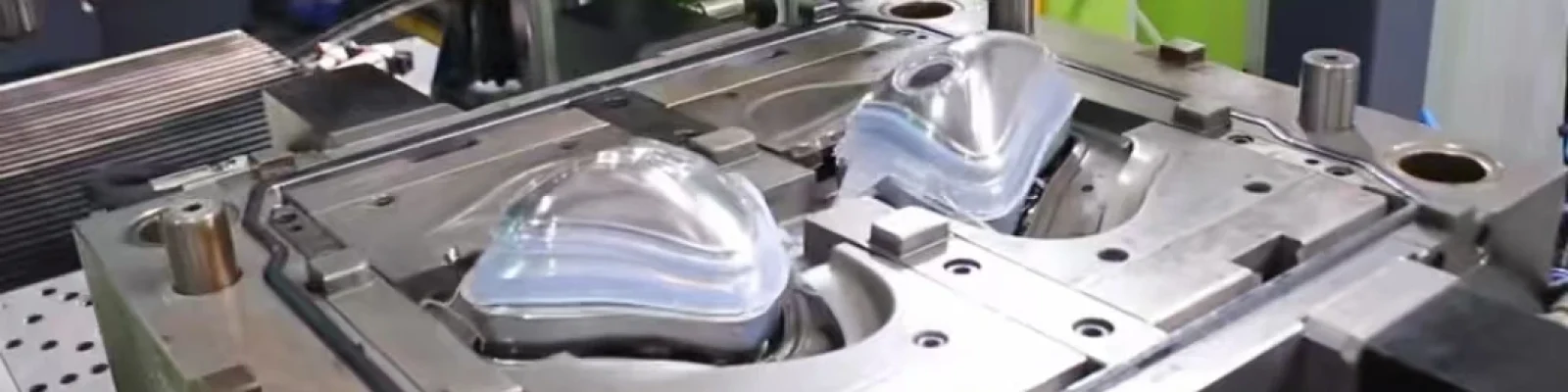
What Is Overmolding?
Overmolding is a manufacturing process in which two or more materials are molded together to create a single finished part. The process involves molding a secondary material over a previously molded substrate, allowing manufacturers to combine different material properties such as rigidity, softness, grip, sealing performance, and aesthetics in one component.
What are the common material combinations used in overmolding?
Some of the most widely used overmolding material combinations include:
ABS + TPE – Used for consumer electronics, hand tools, and protective housings to provide a soft-touch grip.
PC + TPU – Common in electronic devices and wearable products requiring impact resistance and flexibility.
PA + TPE – Frequently used in automotive and industrial applications where strength and vibration damping are important.
Metal + Plastic – Combines the structural strength of metal with the lightweight and design flexibility of plastic, often used in automotive, medical, and electronic components.
How Does the Overmolding Process Work?
Step 1: Mold the Substrate
First, the base component (substrate) is formed using an injection molding process. This substrate is typically made from rigid engineering plastics such as ABS, PC, or PA. It defines the core structure, dimensional accuracy, and mechanical strength of the final part, serving as the foundation for the overmolding process.
Step 2: Place the Substrate into the Mold
After the substrate is cooled and stabilized, it is precisely placed into the second mold cavity. High positioning accuracy is required at this stage to ensure proper alignment. In industrial production, robotic systems or locating features are often used to guarantee consistent placement and prevent misalignment during overmolding.
Step 3: Inject the Overmold Material
A second material, typically a soft elastomer such as TPE or TPU, is injected into the mold cavity, where it bonds to the surface of the substrate. Process parameters such as temperature, injection pressure, and speed must be carefully controlled to ensure strong adhesion and high-quality bonding between the two materials.
Step 4: Cooling and Ejection
Once the overmold material has cooled and solidified, the finished part is fully formed. The mold then opens, and the part is ejected using an ejection system. At this stage, the component combines the rigidity of the substrate with the soft-touch or functional properties of the overmolded layer, ready for inspection or assembly.
What are the advantages of overmolding?
Improved grip and comfort
Overmolding allows the addition of soft-touch materials such as TPE or TPU onto rigid substrates, significantly improving ergonomics. This is especially beneficial for handheld products, reducing hand fatigue and enhancing user comfort.
Better sealing performance
The secondary overmold layer can act as a sealing interface, improving resistance to water, dust, and environmental contaminants. This makes it suitable for outdoor, automotive, and electronic applications that require higher protection levels.
Enhanced appearance
Overmolding enables multi-material and multi-color designs in a single component, eliminating the need for post-processing. This improves aesthetics while allowing more flexible industrial design options.
Reduced assembly operations
By combining multiple parts into a single molded component, overmolding reduces the need for additional assembly steps such as gluing, fastening, or mechanical joining. This helps simplify production and lower manufacturing costs.
Increased product durability
The bond between rigid and flexible materials improves impact resistance and overall structural integrity. Overmolded parts are less likely to loosen, crack, or separate under long-term use or vibration.
What are the applications of overmolding?
Automotive Parts
Steering wheel grips, gear shift knobs, dashboard control buttons, door handles, automotive seals, sensor housings
Consumer Electronics
Smartphone cases, charging cables, earbuds housings, remote controls, wearable device straps, power adapters
Medical Devices
Surgical instrument handles, diagnostic device housings, syringe grips, wearable medical sensors, handheld medical equipment casings
Hand Tools
Power drill handles, screwdriver grips, plier handles, measuring tool housings, industrial tool grips
Conclusion
Overmolding is an efficient manufacturing process that combines rigid and soft materials into a single integrated part. It not only improves product functionality and durability, but also enhances user comfort and appearance while reducing assembly costs.