
Automotive Injection Molding
What is Automotive Injection Molding ?
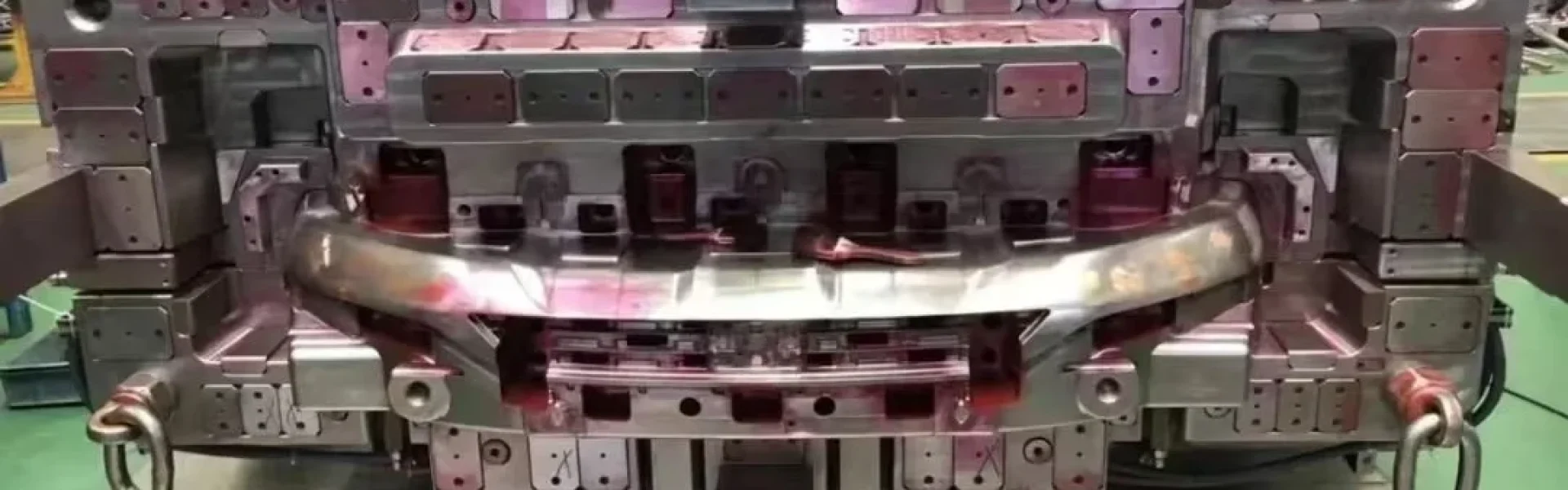
Automotive injection molds are precision tools used in the plastic injection molding process for automotive applications. Automotive injection molding, also known as automotive plastic injection molding, refers to a manufacturing method used to produce plastic components for vehicles. In this process, polymer pellets are fed into the barrel of an injection molding machine, where they undergo heating, compression, shearing, mixing, and conveying to achieve plasticization.
The molten material is then pressurized by a screw and injected through the nozzle at the front of the barrel into a closed mold cavity via the runner system. After cooling and solidification, the mold opens and the finished part is ejected, resulting in automotive plastic components with defined geometry and dimensional accuracy.
History of Automotive Injection Molding – Three Stages
1. Early Stage (1940s–1950s)
Before World War II, automotive components were primarily made of steel and wood. With the commercialization of thermoplastics such as polystyrene and nylon, injection molding began to enter the automotive industry.
The earliest injection-molded parts were small interior components, such as knobs, switches, window cranks, and dashboard decorative elements.
2. Growth Stage (1960s–1970s)
Advancements in chemical engineering led to the development of high-performance engineering plastics such as PP, ABS, and PC. Engineers recognized that plastics were lightweight and corrosion-resistant. Dashboard structures began transitioning from metal stampings to large injection-molded parts.
A key turning point was the oil crisis in the 1970s, which drove automakers to reduce vehicle weight for improved fuel efficiency. This significantly accelerated the adoption of injection molding in functional components such as engine covers and cooling fan blades.
3. Expansion Stage (1980s–1990s)
As injection molding technology matured, structural components and large parts became increasingly plasticized. Additionally, clamping forces of injection molding machines increased from hundreds to thousands of tons, enabling the production of large components such as bumpers.
And CNC machining was introduced into mold manufacturing, improving the dimensional stability of large thin-wall parts. Mold texturing technologies also matured, allowing plastic surfaces to replicate leather and fabric finishes.
Technically, by the 1990s, gas-assisted injection molding became widely adopted, solving shrinkage issues in thick-wall parts (such as door handles and mirror brackets) while reducing weight.
4. Modern Stage (Early 21st Century–Present)
This stage is characterized by multi-material integration and advanced manufacturing technologies.Automotive injection molding has evolved beyond simple forming into composite and hybrid processes. For example:
- 2K / Multi-component Injection Molding
- Insert Molding
- Long Fiber Reinforced Thermoplastics (LFT)
- IMD / IML (In-Mold Decoration / In-Mold Labeling)
Key Advantages and Injection Molding Benefits in Automotive Industry
1. High Production Efficiency and Lower Costs
A typical molding cycle ranges from a few seconds to several minutes, depending on part size and material. The process is highly automated—from feeding and injection to cooling and ejection—requiring minimal labor. This efficiency directly reduces overall injection molding cost, especially in high-volume production.
A single machine can produce thousands to tens of thousands of parts per day. Compared to metal manufacturing, both material and processing costs are significantly lower, which explains the large-scale replacement of metal components with plastic parts in modern vehicles.
2.Ability to Manufacture Complex and High-Precision Parts
Injection molding can produce parts with complex geometries in a single cycle, including clips, ribs, bosses, intricate surfaces, deep cavities, and thin walls—without secondary operations.
With precision molds, tolerances as tight as 0.01 mm or better can be achieved, ensuring high consistency and interchangeability.
Generally, automotive molds are among the most complex, often incorporating lifters, sliders, intricate cooling channels, and sometimes even oil circuits.
3.High Material Utilization and Low Waste
Runners and gates can typically be reground and reused (for most thermoplastics), resulting in minimal material waste. Compared to CNC machining, which removes large amounts of material, injection molding is a near-net-shape process. While metal scrap can also be recycled, plastic processing facilities are usually better equipped with grinders for in-house recycling.
4.Wide Range of Applicable Materials
The process supports most thermoplastics (such as ABS, PP, PC, PA/nylon, POM, and PEEK), some thermosets, and liquid silicone rubber (LSR). Material properties can be enhanced by adding fillers such as glass fiber, carbon fiber, or minerals to improve strength, stiffness, heat resistance, or conductivity. For example, PBT reinforced with 30% glass fiber is commonly used in automotive sensor components. In practice, issues such as fiber exposure (fiber float) may occur and can be resolved by optimizing mold temperature (e.g., increasing to 120°C).
5.Excellent Surface Quality and Multi-Material Capability
Mold surfaces can be finished with polishing (high gloss), texturing, matte finishes, or etching, allowing parts to achieve final appearance directly after molding.
Through multi-shot or overmolding processes, different colors or materials can be combined in a single part (e.g., rigid plastic structure with a soft rubber grip).
Automotive Injection Molding Process Explained
To understand how automotive injection molding works, it is important to break down the process into several key stages
1.Plasticizing and Metering
Plasticizing refers to the process in which plastic is heated in the barrel to reach a flowable state with good processability. Heat is generated by both external heaters and the mechanical action of screw rotation and material friction. As the material moves from the rear to the front of the barrel, it transitions through three states: glassy state, high-elastic state, and viscous flow state.
2.Injection Filling and Packing
Injection filling is the process of injecting the molten material into the mold cavity. It consists of two stages: injection and packing.
During filling, high-temperature melt flows into a relatively cooler mold cavity.
The packing stage compensates for material shrinkage and further densifies the part. Interestingly, the melt continues to flow during this stage—a phenomenon known as packing flow.
3.Cooling and Solidification
This stage begins when the gate freezes and continues until part ejection. The key characteristic is temperature reduction. Interestingly, even after the gate freezes, the part remains in the cavity for additional cooling to ensure sufficient rigidity and to prevent deformation during demolding.
Materials and Applications in Automotive Injection Molding
PC/ABS, ABS, PC and related blends and alloys: ABS is widely used for its good toughness and low cost, and is commonly applied in interior structural parts such as dashboards, door panel trims, and center console panels. PC/ABS is a blend of ABS with polycarbonate, which improves transparency and impact resistance. It is widely used in instrument covers, instrument cluster housings, and edge protection components. Pure PC offers excellent strength, impact resistance, and transparency, and is mainly used for headlamp lenses, exterior components around windshields, and high-strength structural housings.
PP, PP+compounds (TPO/TPR) and glass fiber reinforced versions: Polypropylene is widely used due to its chemical resistance, low density, and good moldability. It is commonly applied in interior trim panels, door trims, trunk liners, and exterior components such as bumper substrates and grille supports. Glass fiber reinforcement (GFPP) significantly improves strength and stiffness, making it suitable for load-bearing components.
PA (nylon series, commonly PA6, PA66, and glass fiber reinforced grades): These materials offer excellent wear resistance and heat resistance. They are widely used in bearings, gears, connectors, and intake/exhaust-related components. When reinforced with glass fiber, they provide higher strength and stiffness, although moisture absorption needs to be carefully considered.
PBT, PET, and copolymer materials such as PPA/PBT blends: These materials are widely used in electrical and electronic components, connector housings, air ducts, and transmission parts. They offer good heat resistance and chemical resistance, with relatively stable bonding properties.
PPS, PPSU, PEEK and other high-temperature thermoplastics: These materials offer excellent heat resistance, chemical resistance, and mechanical performance. They are commonly used in engine compartment components, thermal management parts, connectors, and other high-temperature applications. However, they are relatively expensive and are mainly used in critical components.
TPE/TPO/TPU elastomeric materials: These are used for sealing strips, decorative trims, soft interior components, and cushioning parts. They offer good elasticity and weather resistance, but their heat resistance and aging resistance depend on specific formulations.
POM (polyoxymethylene, commonly known as acetal) and short fiber reinforced materials: These are used for small gears, sliding components, and guide parts. They provide excellent wear resistance and dimensional stability.
Other high-performance materials: PVDF, PETG, UHMW, and others are used in specific systems such as fuel systems, liquid fuel management, and chemical-resistant components.
Common Challenges in Automotive Injection Molding
Plastics play an important role in automotive manufacturing. They not only enable lightweight design, improving fuel efficiency, but also allow for part integration, thereby increasing production efficiency. In today’s global and environmentally conscious era, automotive plastics and technological innovation play a critical role in driving industry development and environmental sustainability.
Bottleneck 1: Conflict between appearance quality and molding process
High-end interior materials (such as suede-like fabrics) tend to experience surface defects such as mottling, wrinkles, and incomplete coverage when formed into complex shapes (large radii and sharp corners). This is because multilayer composite structures are extremely sensitive to temperature and pressure, while complex geometries cause uneven material flow and adhesion. Solving this issue typically requires multiple trial iterations (adjusting temperature, pressure, and holding time repeatedly), which increases development time and cost. As consumers demand higher perceived quality in vehicle interiors, this contradiction becomes increasingly prominent.
Bottleneck 2: Efficient detection and removal of micro-defects
In injection molding, even a defect rate as low as 0.2% (such as sink marks, short shots, or flash) can still affect product performance and customer satisfaction. Traditional manual inspection is inefficient, costly, and often fails to detect subtle or hidden defects. The industry is shifting toward in-mold pressure sensors for real-time monitoring, automated sorting systems, and closed-loop data control to achieve rapid detection and elimination of micro-defects.
Bottleneck 3: Dual pressure of lightweighting and carbon reduction
Lightweighting requires the use of high-performance reinforced materials such as glass fiber and carbon fiber, but the production of these materials is energy-intensive, increasing carbon emissions. In addition, traditional long-fiber compounding processes suffer from thermal degradation and high emissions. The industry is exploring direct molding processes (eliminating re-pelletizing steps) and increasing recycled material usage to achieve lightweighting while meeting low-carbon goals. This “lighter yet greener” contradiction is a key direction for material development and process optimization.
Future Trends in Automotive Injection Molding
With the widespread adoption of electric vehicles (EVs), injection molding is rapidly evolving toward “extreme lightweighting” (such as chemical micro-foaming technologies) and “high integration” (integrating thermal management, electrical conductivity, and structural functions into single molded parts). It can be said that without advancements in injection molding technology, modern vehicles would not only be heavier but also unable to achieve their aerodynamic designs and high-tech interior aesthetics.
Why Choose navimold for Automotive Injection Molding?
We at navimold have been established for over 10 years and have experience with two-plate molds, three-plate molds, 2K molds / two-shot molds, multi-shot molds, insert molds, stack molds, and overmolding, among others.
Automotive Injection Molding FAQ
What materials are best for automotive injection molding?
The selection depends on the function and appearance requirements of different automotive components; it cannot be generalized.
How much does automotive injection molding cost?
It depends on the product structure and the number of lifters and sliders in the mold.
What are common defects in injection molding?
Flash, sink marks, flow marks, weld lines, etc.
How long does a mold last?
It is typically determined by the material of the mold core, as different materials correspond to different lifespans.