From Prototype to Mass Production
How we turn your ideas into stable, scalable manufacturing
In the manufacturing industry, the transition from Prototype to Mass Production is a critical stage in product development. A successful product depends not only on its design, but also on whether it can smoothly move from concept to stable and repeatable production and application.
1. Prototype Stage
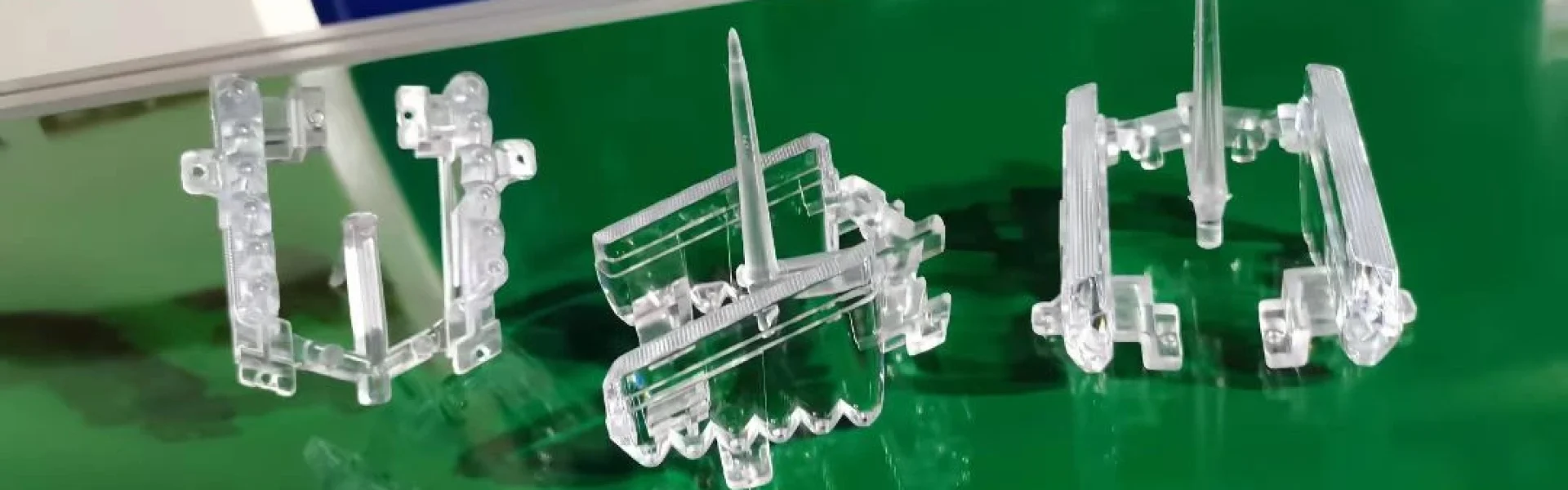
At the prototype stage, the main objective is to validate the design concept and basic functionality. From the initial idea to the first physical samples, the success of this stage directly influences the client’s confidence in the entire development process. Therefore, choosing a reliable supplier is extremely important. The internal team structure of Navimold — combining industrial design and mold engineering — strongly supports the successful realization of early-stage product concepts.
In this stage, we typically focus on:
- 3D model review and feasibility analysis
- Rapid tooling or soft tooling for prototyping
- Dimensional inspection and assembly testing
- Initial functional validation
The key purpose of this stage is to identify and eliminate potential risks before investing in full production tooling.
Taking one of our U.S. customers as an example, the primary focus at this stage is product functionality, while cost is secondary. However, to be honest, this is often also the most expensive stage, as multiple prototype molds for functional validation can sometimes cost as much as a single hardened steel production mold.
2. Engineering Optimization (DFM Stage)
Before moving into mass production, we conduct a detailed Design for Manufacturability (DFM) analysis. Our professional mold design and engineering teams ensure that both product and tooling costs are optimized in a reasonable way.
For example, with one of our Italian clients, our mold engineering team worked closely with both their mold design and product design teams. Any issues were quickly communicated and resolved on both sides, allowing the project to move forward efficiently.
Key optimization areas include:
- Tolerance optimization
- Material selection adjustment
- Mold flow analysis and structural optimization
- Cost and cycle time optimization
The goal is to ensure the product is not only functional but also suitable for large-scale manufacturing. At this stage, we analyze the product structure in detail and make adjustments to ensure smooth demolding and cost efficiency, since steel molds cannot be forcibly released like silicone molds.
We also optimize cavity layout and evaluate special mold mechanisms such as sliders, lifters, and secondary ejection systems.
Our main customers are from the European and North American markets. Some first-time clients in this industry may not have strong technical knowledge; their 3D designs may look good externally but are not optimized for manufacturing or cost efficiency. In one extreme case, we helped a German customer reduce mold cost by up to 60%.
3. Pre-Production Validation
As the final stage of product development, this phase focuses on mold functionality and stability. Dimensional verification is carried out using CMM (Coordinate Measuring Machine) to ensure accuracy.
Our facility is equipped with 7 injection molding machines, which support both trial molding requirements and potential small-batch production.
In this stage, we verify:
- Mold performance stability
- Sample consistency
- Assembly compatibility
- Surface quality and cosmetic requirements
If necessary, final adjustments are made before mass production. Once the mold is finalized, we send samples to the customer for final approval. After confirmation, we proceed with mold packaging and logistics arrangement.
4. Mass Production
Once the design has been fully validated, we move into the stable mass production stage. At this stage, the communication with customers mainly focuses on issues related to plastic products. As a supplier, our primary responsibility is to reduce the product defect rate. At the same time, we also discuss market feedback with customers. For some best-selling products, customers may directly request preparation for a second version of production or the development of related accessory products.
This stage includes:
• Hardened production tooling
• Standardized process parameters
• Quality control system (Incoming Quality Control IQC, In-Process Quality Control IPQC, Final Quality Control OQC)
• Stable production cycle and capacity consistency
The core focus of this stage is repeatability, production efficiency, and quality consistency. We apply different sampling inspection standards based on customer requirements, such as MIL-STD-105D / ANSI/ASQC Z1.4 for European and American customers, and GB2828 for Chinese standards, to control the AQL level of the products. Our typical defect rate is around 2%–3%, which places us among suppliers with relatively low defect rates in the industry.
5. Risk Control and Quality Assurance
Throughout all stages of the development-to-production process, once we identify any potential issues, we immediately notify the relevant engineers and organize meetings to discuss and resolve them until the problem is fully addressed. Many of our engineers are industry experts with over 20 years of experience. Whether in design or production, we strictly control risks to help our customers successfully complete the entire project.
To ensure a smooth transition from prototype to mass production, we mainly focus on the following aspects:
• Early engineering involvement
• Clear communication during the design stage
• Continuous process monitoring
• Strict quality inspection at every stage
A high-quality injection mold factory is ultimately defined by the quality of the molds and plastic products it produces. Therefore, at every stage—from plastic product design to mold design and then to plastic part production—we proactively consider potential mold-related issues in advance. While ensuring full communication with the customer, we resolve potential risks to provide greater confidence and assurance to our clients.
Conclusion
A successful transition from prototype to mass production requires more than just manufacturing capability—it requires engineering experience, process control, and a deep understanding of product behavior.
Our team supports customers throughout the entire journey, ensuring a smooth path from concept to stable production.