
High-Precision Plastic Parts
Tight Tolerance Injection Molding Solutions
High-precision plastic components are widely used in the medical, automotive, and electronics industries, where strict requirements are placed on dimensional accuracy and consistency. Our German and Swedish clients typically work with us on injection molds for electronic components.
At present, there are two key evaluation criteria for precision molded parts: dimensional repeatability and part-to-part quality consistency. In injection molding, precision is not simply about producing a qualified part once—it is about maintaining stable and consistent quality in mass production.
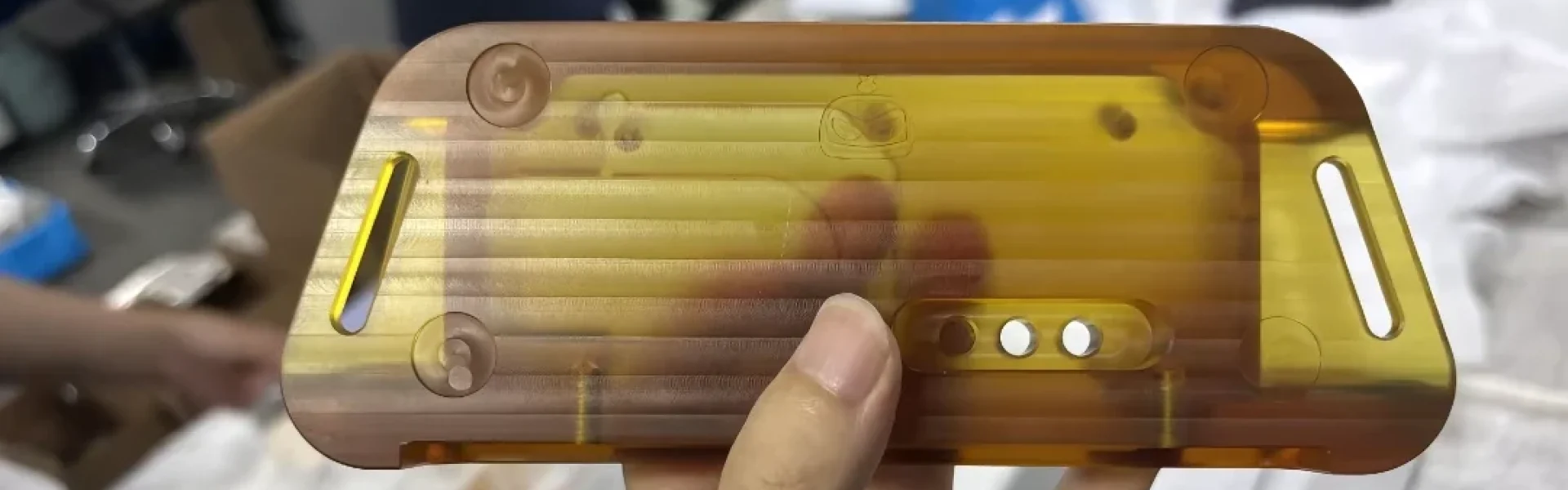
What Are High-Precision Plastic Parts?
In general, high-precision plastic parts typically have the following characteristics:
- Critical dimensional tolerances can reach ±0.01 to 0.001 mm
- High consistency in mass production
- Excellent assembly fit and repeatability
Different applications require different levels of precision, but the core requirement is always stability. This places strict demands on material selection, mold steel selection, and even mold surface treatment processes.
Key Factors Affecting Precision
Mold Design
Mold machining accuracy, cavity consistency, and cooling system design all directly affect part dimensional stability. For complex geometries, the design should follow a simple and rational principle, avoiding excessive complex features concentrated in localized areas.
Material Properties
From the mold material perspective, key components such as cores, cavities, and sliders must be made of high-strength, high-hardness tool steel to ensure long-term dimensional stability during production.
From the polymer perspective, different plastics exhibit different shrinkage behaviors. Common materials used in precision molding include PS, ABS, AS, PMMA, PC, PPO, and PSU. Engineering plastics such as PA can also be used, but due to moisture absorption and shrinkage variation, their dimensional stability is relatively lower.
In comparison, materials such as POM, PP, PE, and TPE are generally not suitable for ultra-high precision applications. To improve dimensional stability, glass fiber reinforcement or mineral fillers are often used, which significantly reduce shrinkage and improve structural stability.
For example, a PA6 material with 45% glass fiber reinforcement can reduce shrinkage from approximately 0.6%–1.4% to around 0.3%–0.7%, significantly improving dimensional control capability.
Process Control
Injection pressure, temperature, and cooling time must remain stable; otherwise, dimensional variation is likely to occur. The mold must be designed with a properly engineered cooling or heating system to ensure uniform and stable mold temperature.
Equipment Capability
Production of high-precision plastic components requires stable, high-precision injection molding machines. In general, computer-controlled hydraulic machines or all-electric injection molding machines are recommended, as they provide higher repeatability and better process stability. Equipment stability is fundamental to ensuring that mold capability and material behavior remain fully controlled during production.
From a technical perspective, there are three key points:
- Injection pressure has a significant influence on molding shrinkage.
- It enables thinner wall thickness and longer flow lengths. For example, with PC material, conventional machines at around 177 MPa can produce parts with wall thickness between 0.2–0.8 mm, while precision machines operating at 392 MPa can produce parts in the 0.15–0.6 mm range. Ultra-high-pressure systems enable even higher flow length ratios.
- Increasing injection pressure improves injection speed performance. To achieve rated injection speed, there are generally two approaches: increasing system pressure or optimizing screw design to increase L/D ratio.
Common Issues
In real production, common issues in high-precision projects include:
- Warpage, typically caused by gate location, gate type, and number affecting melt flow behavior
- Sink marks, usually caused by uneven wall thickness leading to localized shrinkage
- Tolerance stack-up, resulting from accumulated deviations across multiple mating parts
- Inconsistent dimensions in multi-cavity molds, where higher precision makes cavity-to-cavity consistency more difficult to control
Navimold Engineering Approach
From an engineering perspective, our first priority is not fixing problems after they occur, but preventing them at the design stage.
- We conduct DFM (Design for Manufacturability) analysis to identify potential risks and propose optimization solutions for client review
- Mold flow analysis is performed to optimize gate location and gating system design
- Tolerance optimization is carried out, with critical dimensions verified using CMM (Coordinate Measuring Machine) to prevent tolerance accumulation
- Multiple trial runs (T0–T2) are used to validate mold stability and process robustness
Injection Molding vs. CNC Machining
- Injection molding: suitable for high-volume production, with typical precision around ±0.01 mm
- CNC machining: suitable for ultra-high precision (≤ ±0.005 mm) or low-volume production
Selecting the correct manufacturing process at the early stage can significantly reduce cost and minimize project risks.
Contact Us
If you have requirements for high-precision plastic components, please feel free to share your drawings or tolerance specifications.
We will provide the most suitable manufacturing solution based on your project requirements.